Simon Weisse Designs Miniatures from Wes Anderson’s Dreams
Tal Solomon Vardy
The Phoenician Scheme, Simon Weisse
While Hollywood rushes forward with computer-generated effects, Simon Weisse builds entire worlds on a small scale with a team in Berlin, including a joyful Israeli presence – Gali Blay.
The miniature and props designer, who worked with Wes Anderson on the film The Phoenician Scheme, brings back the magic of physical craft, which becomes a spectacular cinematic scene. And also – why are there Hebrew signs in the film?
The Phoenician Scheme, Wes Anderson’s new film, is about a wealthy and controversial businessman, Zsa-Zsa Korda, who survives several assassination attempts and decides to appoint his estranged daughter, Liesel the Nun, as his sole heir. In order to secure funding for his ambitious project, whose goal is to change the infrastructure of Phoenicia, Korda sets out on a journey with Liesel and his private tutor to convince a group of eccentric investors to finance the plan.
Wes Anderson is known as one of the few directors who works with an almost permanent team from film to film – from the actors to the production crew. Simon Weisse, one of the world’s senior miniature and props designers, came to work with him on The Grand Budapest Hotel (2014), after Babelsberg Studio recommended him when the director was looking for a miniature designer. From then until today, they have worked together on each of his films, including Isle of Dogs, The French Dispatch, Asteroid City and more. Most of his works will once again be revealed in the exhibition Wes Anderson: The Archives that will open this coming November at the Design Museum in London.
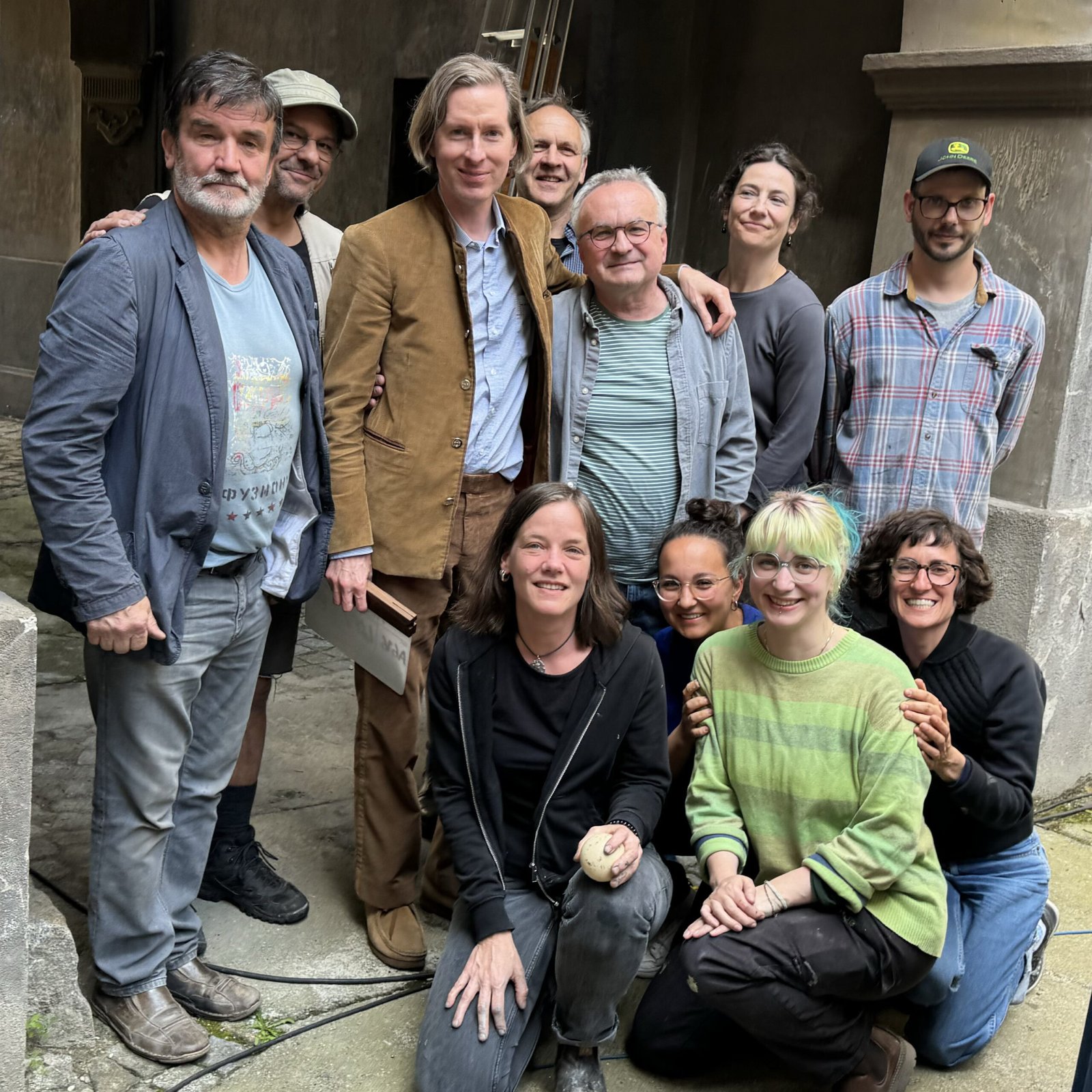
Wes Anderson and Simon Weisse's Team
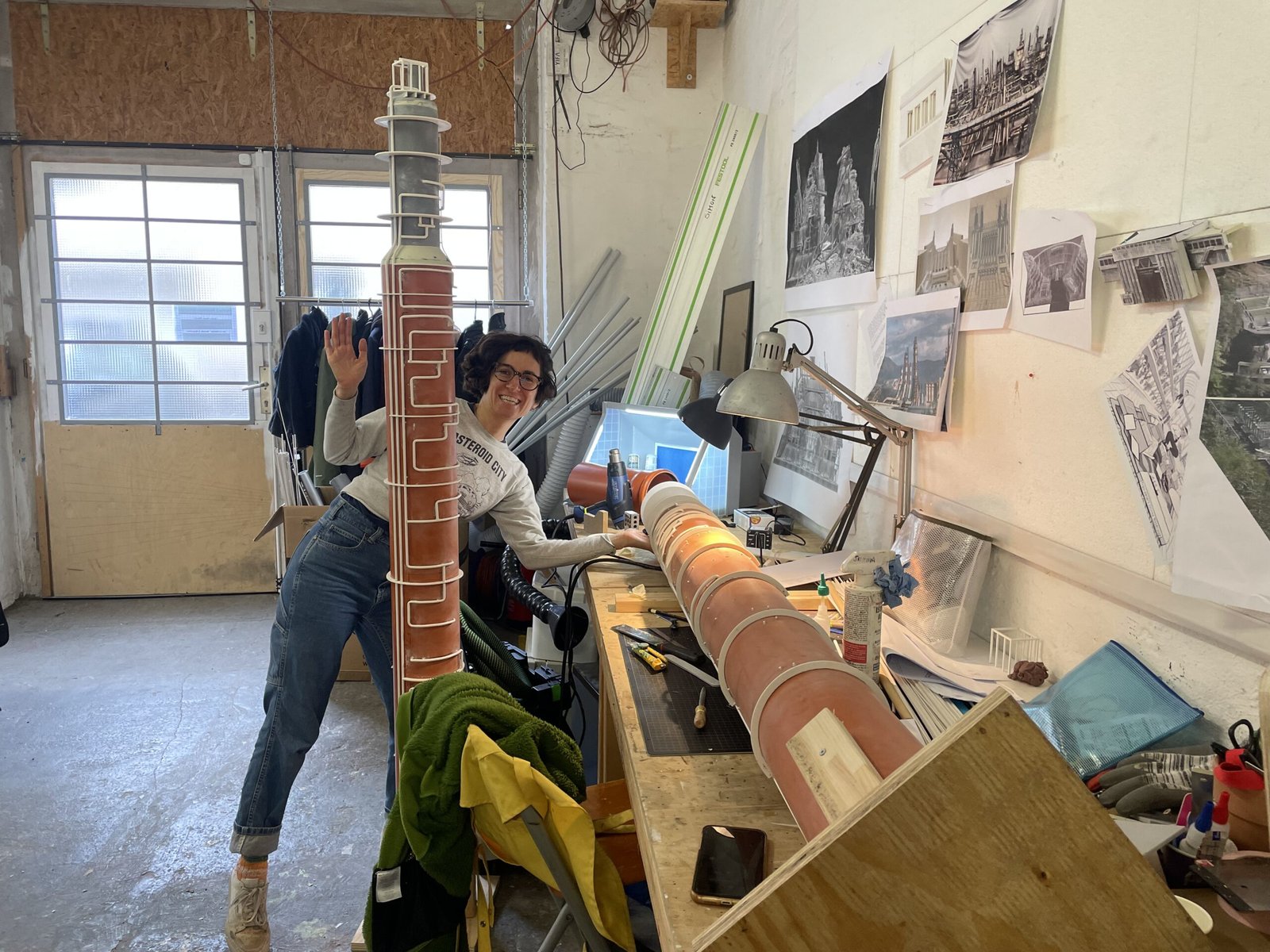
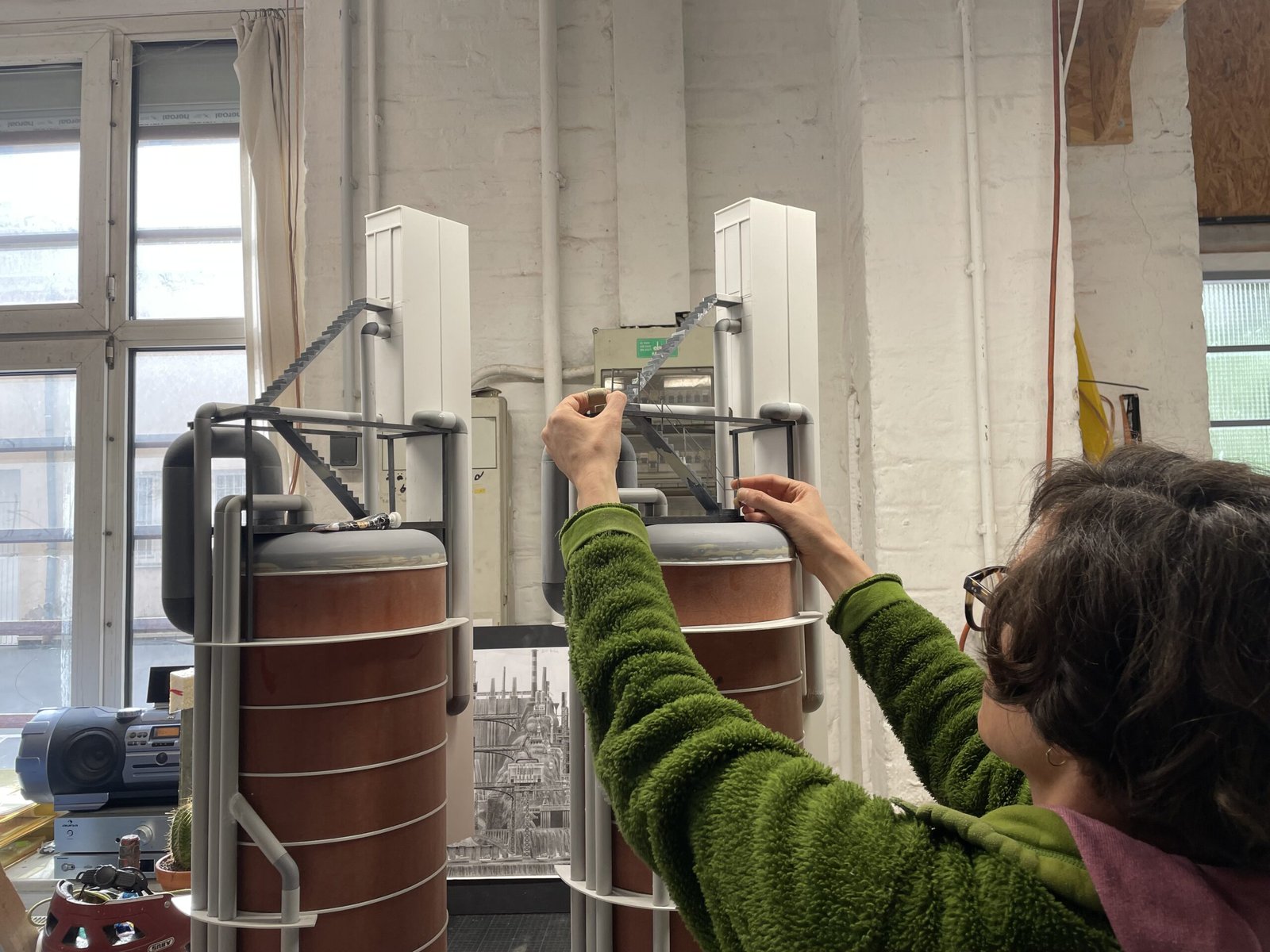
Gali Blay and Lucy Weisse, The Phoenician Scheme, photo Susanna Jerger
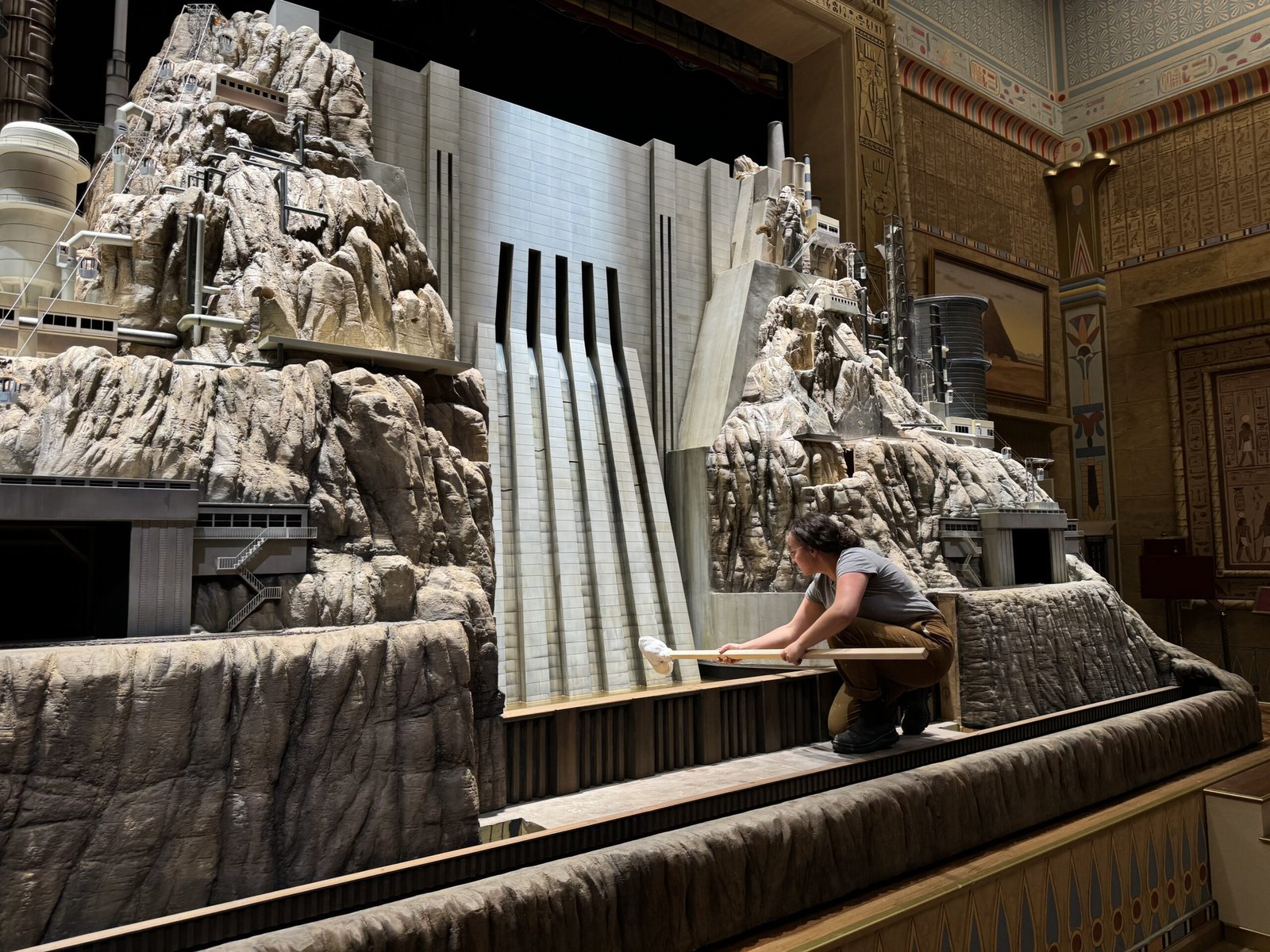
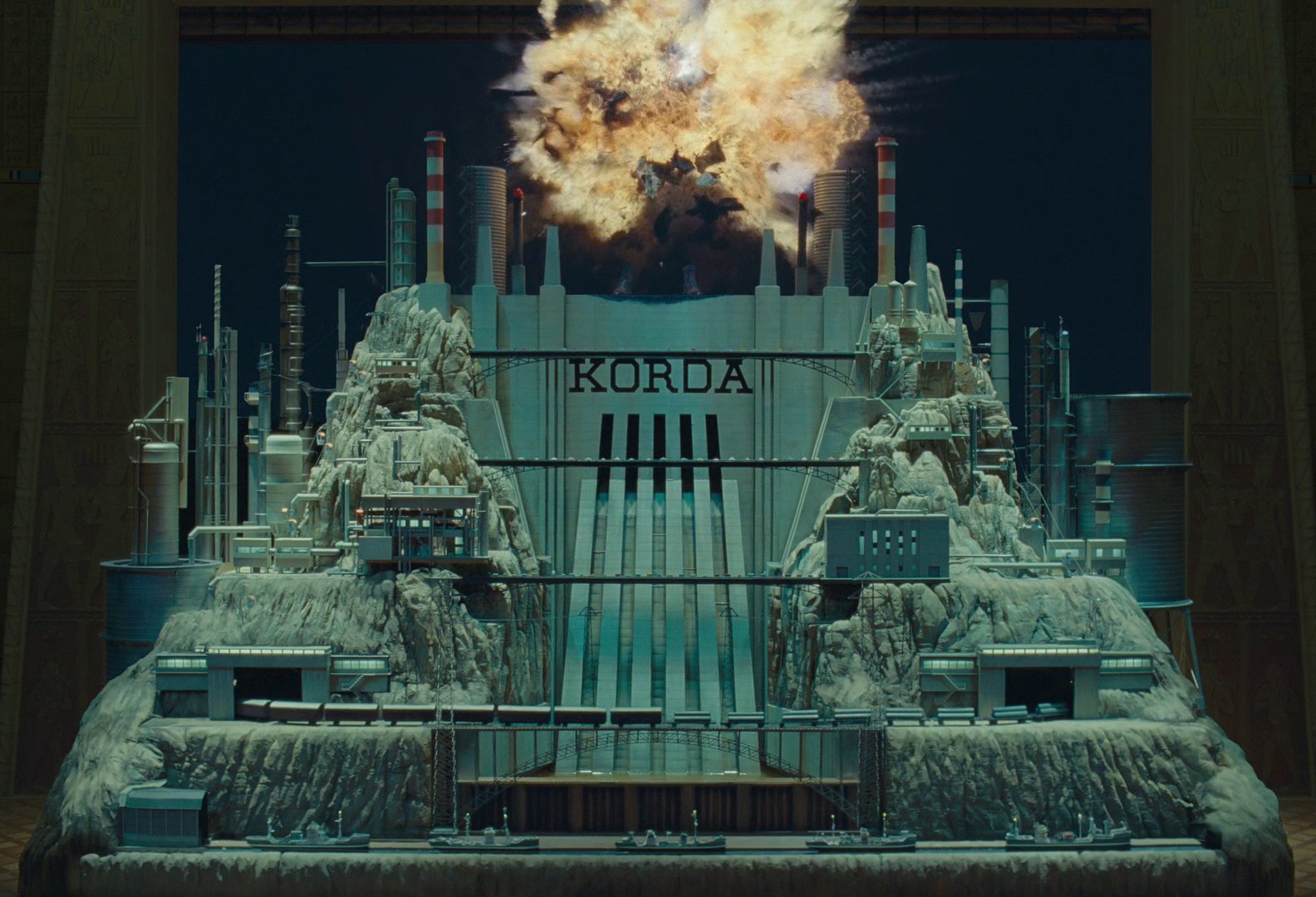
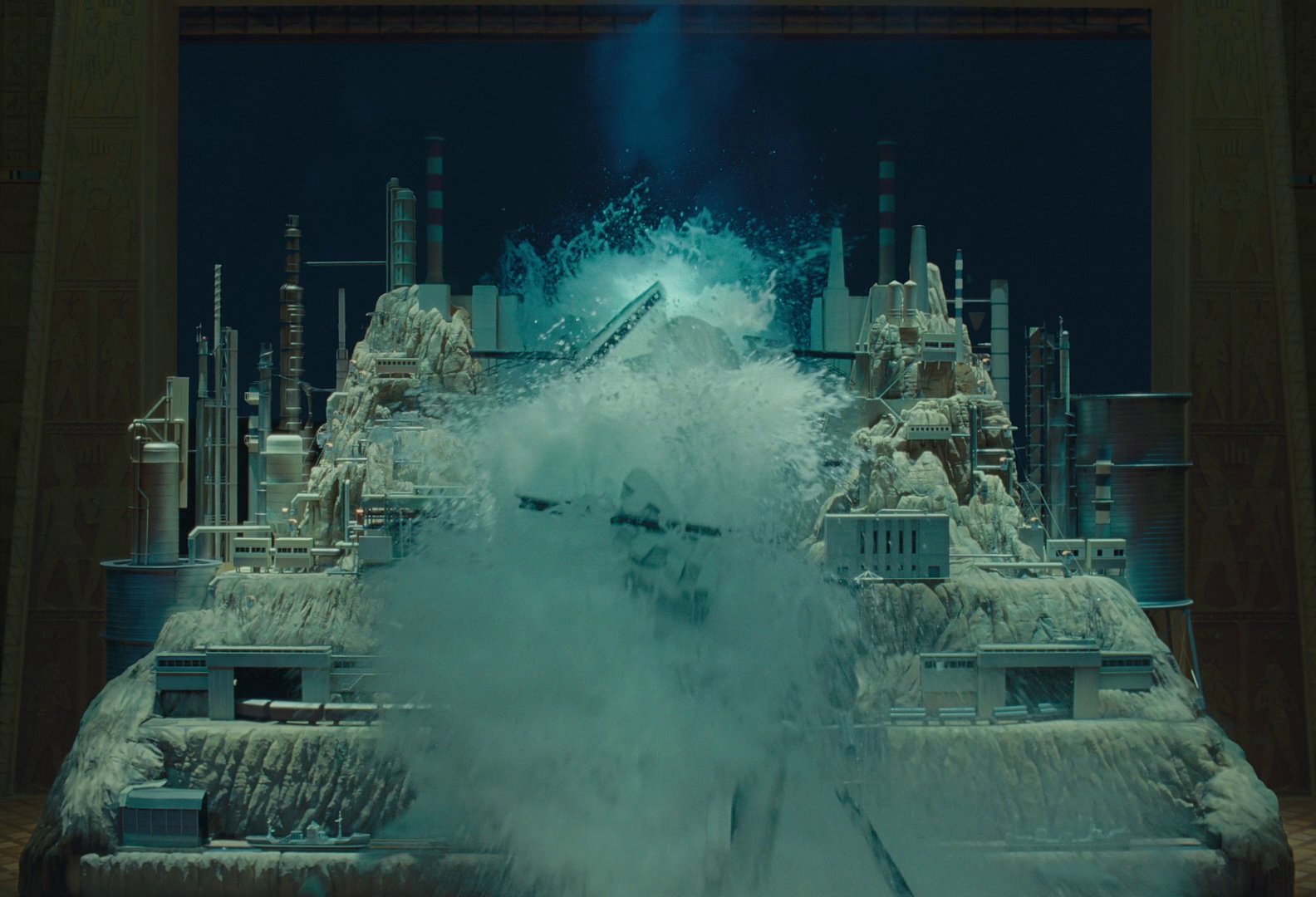
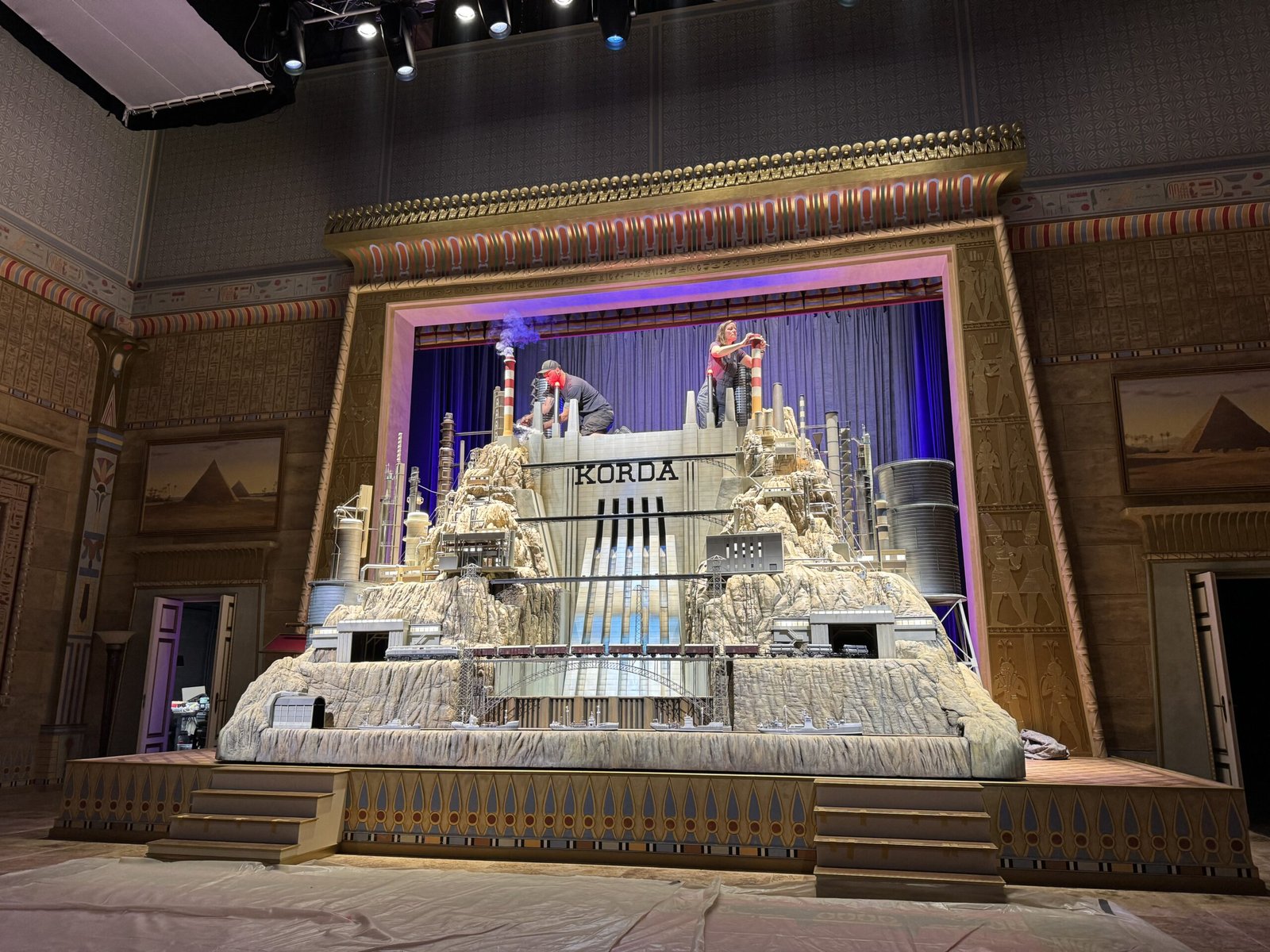
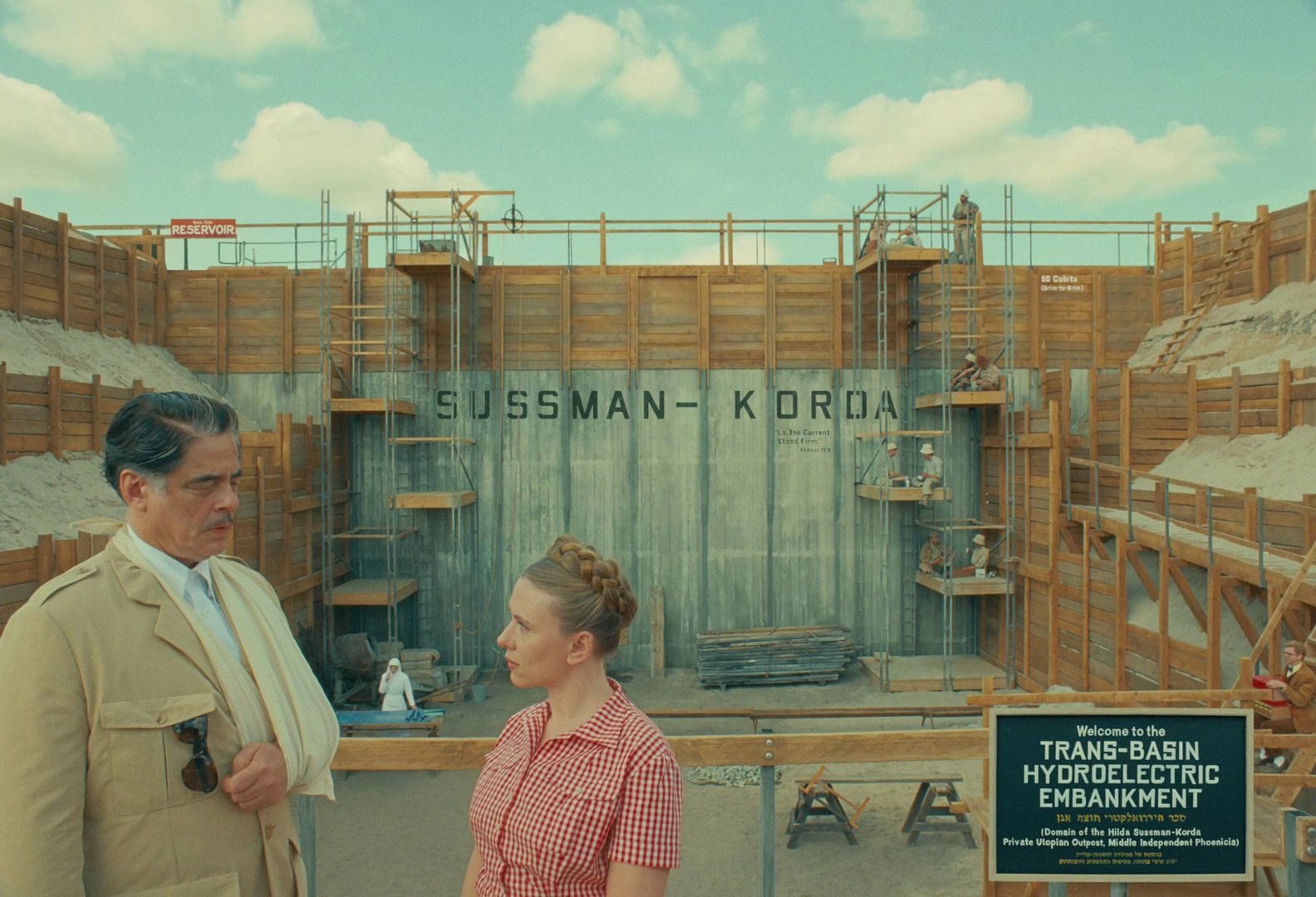
In the film The Phoenician Scheme that was released recently, Simon Weisse together with the team in Berlin designed miniatures of clouds, a small airplane, and two versions of the central dam measuring 6.5 meters wide and 4 meters high – one for filming and the other for explosion, which took 10 weeks to build just before the start of shooting.
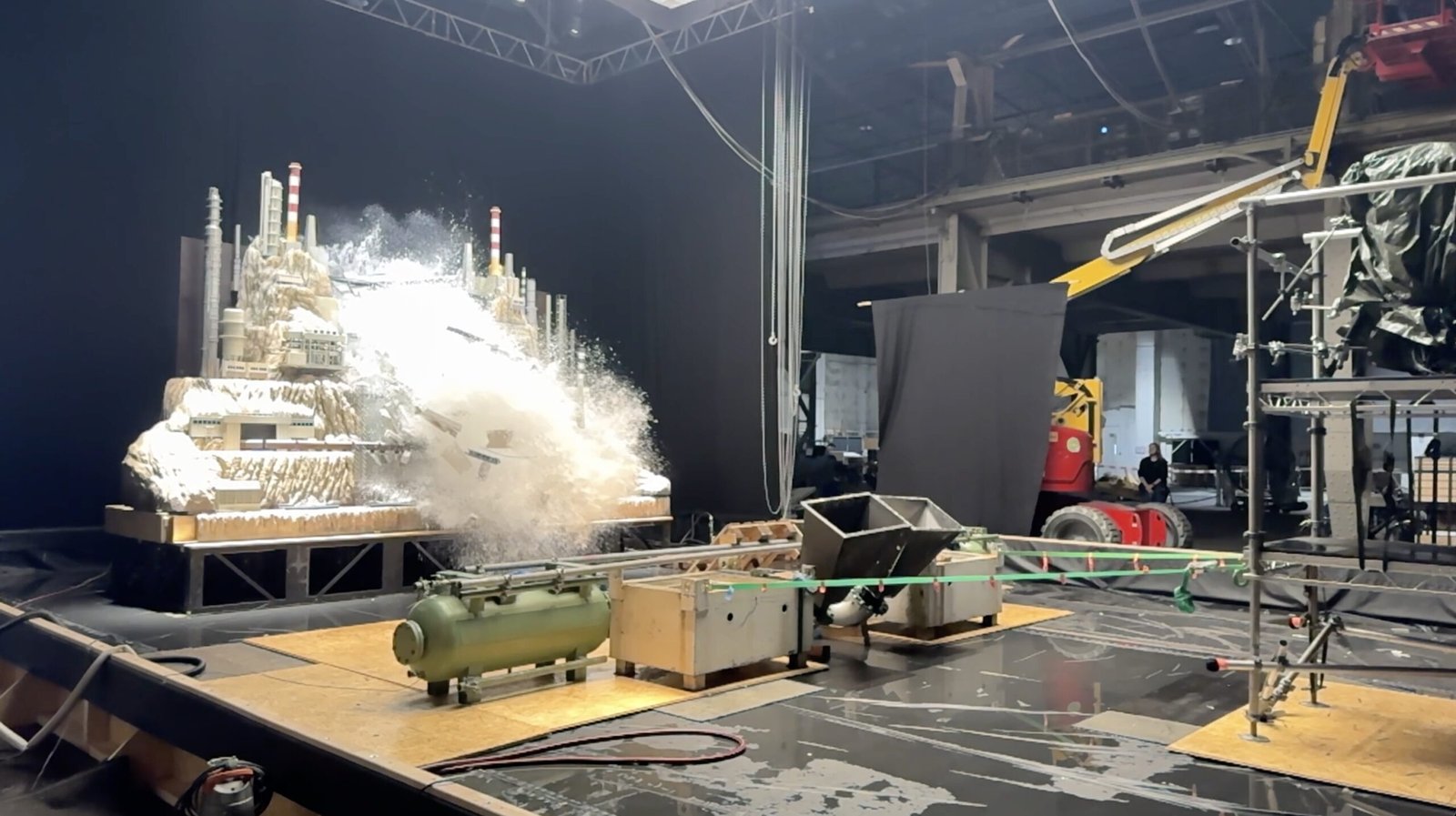
The miniature dam intended for the water explosion had three takes, joined by Gerd Nefzer, responsible for the film’s special effects, who in recent years won three Academy Awards for the two Dune films and for Blade Runner 2049. “He really is the best at this,” says Weisse.
The work begins with storyboards drawn by Turlo Griffin in collaboration with Adam Stockhausen’s art department, the production designer who has worked closely with Wes Anderson for the last two decades. Griffin drew the sketches of the dam on black paper with white chalk, and Victor Georgiev, a concept art illustrator, added the colored parts on top.
“It’s complicated, because you get these drawings and they look nice. They look really nice. And then they say, ‘Oh, you have to build this.’ And it’s not easy, because how do you build it? Physically, sometimes it is almost impossible to build. It’s good to have someone like Turlo Griffin to draw these things,” says Weisse.
Dam, The Phoenician Scheme, Simon Weisse
The Israeli member of the team
In Simon Weisse’s team works designer Gali Blay, a graduate of the Department of Photography at Bezalel (2014) and with a Master’s degree in Social Design from the Design Academy Eindhoven, who realized that her calling was not to be a photographer, but to use the skills she acquired to create animation. Today, she is developing the animation series Electric Water in collaboration with the Marine Mammal Research Institute in Greece.
“My studies in Eindhoven helped me explore and understand that I want to work as a creator through animation in the style of fantastic realism,” she says. After completing her studies, she decided to follow her dream of working with Wes Anderson. She moved to Berlin, where the model-building studio for his films is located, and tried to get in, but Simon politely declined.
After three years of persistence, Blay managed to convince Simon Weisse, the head of the studio, to give her a chance. Her first trial by fire was in the film The Matrix 4 (2021). Since then, she has been part of the team, which numbers about 15 freelancers. “Because of my experience creating 3D files, my role in the team is often planning and designing the models on the computer before the physical build,” she explains. In The Phoenician Scheme, she built a digital model of the dam to understand its dimensions and proportions. “Together as a team we have a passion for miniature sets and prop design, and we can create anything that comes to mind,” she notes.
Gali Blay, The Phoenician Scheme, photo Susanna Jerger
Building the dam began with a three-dimensional drawing of the model, but Wes Anderson wanted it narrower, in “false perspective,” as he describes in an interview. Simon Weisse and the team prepared a smaller model with styrofoam and cardboard to see how it worked – and looked at it through the camera. Step by step they progressed in the design process.
When I asked about the scale of the model, Weisse laughs – the dam itself “is fake” and does not try to imitate a real dam. “You have ships, but they are much smaller than the trains in the background. It works in the picture. It’s very strange, but it is totally fake from beginning to end. The important thing was to make it work in the film,” adds Weisse.
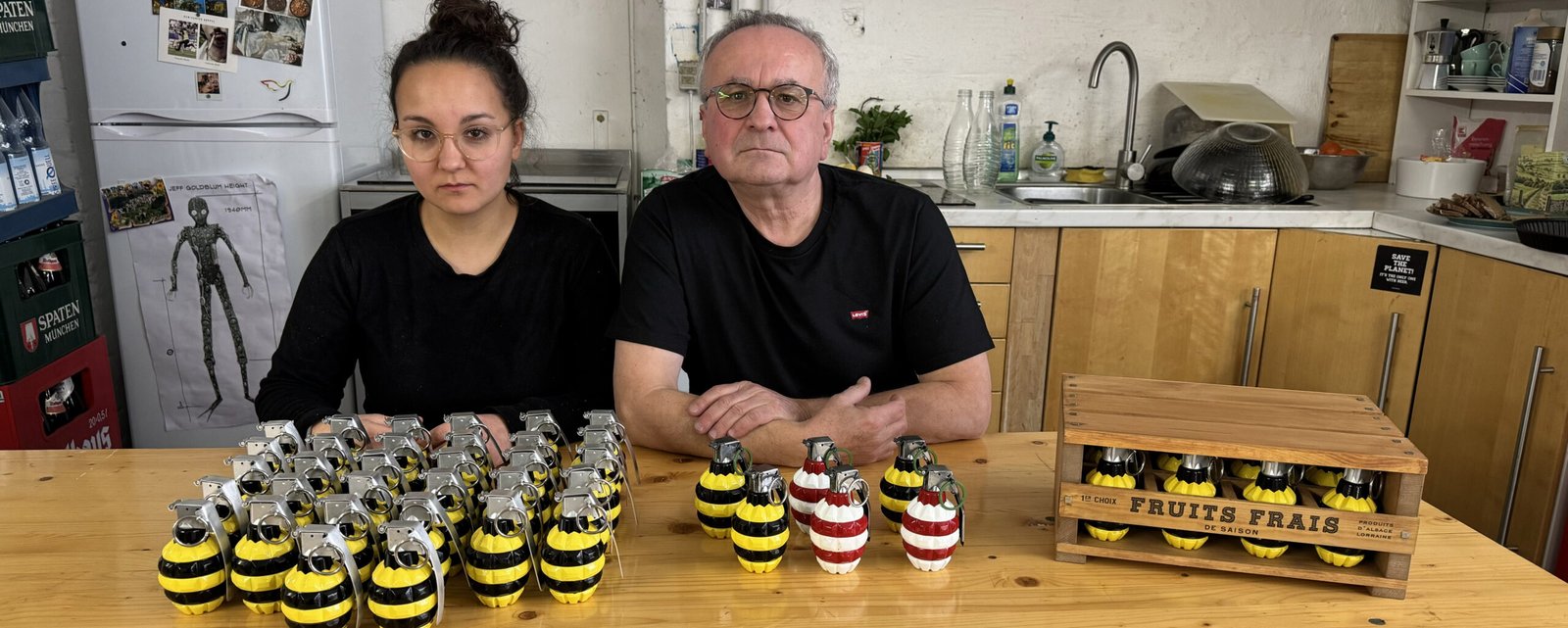
Simon Weisse and his team built quite a few props for the film: black-and-yellow hand grenades, the lie detector, a double-edged sword, a dynamite bomb, and more.
Not everything went as planned. Gali Blay shares: “The biggest challenge with the dam was that all the things had to move together in a uniform way. That means, the train, the boats, the cable car, and the dam itself. Each object had its own mechanical mechanism, and everything had to work perfectly in front of the camera. It took some time until everything worked, a few cable cars broke along the way and smashed on the dam. In the end, we are a team where each person is an expert in his field, so there’s no fear that there won’t be a solution – everything somehow always works.”
״For us, the important thing is not the model itself, but the effect it gives in the film״
The Phoenician Scheme, Focus Features
Simon, How did you feel when you saw the dam explode?
“For us, the important thing is not the model itself, but the effect it gives in the film. That’s what we work for. The model itself, if it’s broken, I don’t care (laughs). It has to look good on camera. That’s why we had two: one big model for the main filming that didn’t explode. We built a second simpler model for the water explosion. I still hope that the big dam will be displayed at the Design Museum in London, but I don’t know yet.”
Are there hidden details in the miniature you built?
“If you look closely at the scene, you’ll see gondolas on wires on the right and left, it was so complicated. They hung there for about 30 seconds and then fell down. We had to put them back again. It was complicated. In the film, I think on the left side, the gondolas simply fall down, but nobody notices,” says Weisse.
Gali Blay shares, “Actually we hid inside the dam, at the entrance to the train tunnel, a small pig doll. Nobody noticed it until Wes Anderson’s daughter came to the most critical shooting day of the dam and found the pig. Of course she got it as a gift! In other films we almost always hide R2-D2 from Star Wars.”
Interesting. What was the main inspiration for the design of the miniature?
Simon reveals, “Zsa-Zsa Korda, an entrepreneur who goes to a certain part of the world, cheats in his business dealings and makes strange deals. He builds rivers and dams and train lines and tunnels, and all these different places where he worked – are combined inside this model. We have a factory with a smoking chimney. So you have all this mixture of nature and industrial landscapes that were the inspiration for the model. If you look closely at all this, it cannot work. It’s totally fake from beginning to end, but it looks good!”
The Phoenician Scheme, Focus Features
Dam, The Phoenician Scheme, Simon Weisse
The Future of Miniature Design in Films
Do you have advice for young artists who build miniature models?
“That’s an interesting question, because 20 or 25 years ago, I thought all this would end, there would no longer be miniatures in films because you can do everything digitally. But it’s very strange, since Wes Anderson and even other filmmakers, in the last 10–12 years, they want to return to this again, to use miniatures for visual effects today.
We have a very small group in our company. We don’t really take new people. It happens sometimes and they really need to be gifted in model building, but it’s not easy these days because you do everything on the computer and many people think they come to our workshop and we sit in front of screens, and I say – ‘No, you need to get dirty.’
What interests me is the combination of all this. You have old techniques, new techniques, even this side of AI is interesting. We’ll need to see what we can do with it. I’m not afraid of it. It’s just interesting and nobody really knows where it’s going.
Young people need to be curious and interested in a little bit of everything, and then after some time you can choose your side. Maybe one side you specialize in more, whether it’s drawing or building. I think you can’t say from the start ‘I want to do this.’ You need to do several things and then after a while you choose.”
Are there studios in Hollywood these days or only in Europe?
“Hollywood is mainly television and most of the films moved to Georgia and Atlanta. It’s very strange, most films in America are filmed in Atlanta. In Hollywood I know there is one company left in Los Angeles that works with miniatures. They did all the films like Tenet, like Inception and wherever you find models. And then there’s another very good company in New Zealand, Weta FX, they do many creatures for The Lord of the Rings and many models like for Blade Runner 2049.
Not many people remain in the world in such a niche. In Europe, we’re not the only ones, but we’re present. I know some pretty good people in England, but sometimes they are a bit more specialized in stop-motion animation, so it’s a bit different. All the things they do are a bit nice and delicate for children, and maybe we are a bit more realistic, I don’t know. I know some good people in Budapest and some in Paris. It’s a niche. It’s not so demanded, and in film productions, in order to make us work they need money.
If a director wants it, it’s an artistic choice he makes. Sometimes they want very complicated things, but they don’t have money. Just two weeks ago there was a European film here and they wanted very complicated things, but I had to say ‘no’ because we need to pay our rent.”
Simon Weisse worked with his team over the past year on a film with a major director that he still cannot reveal, and he believes it will only be announced in a year.
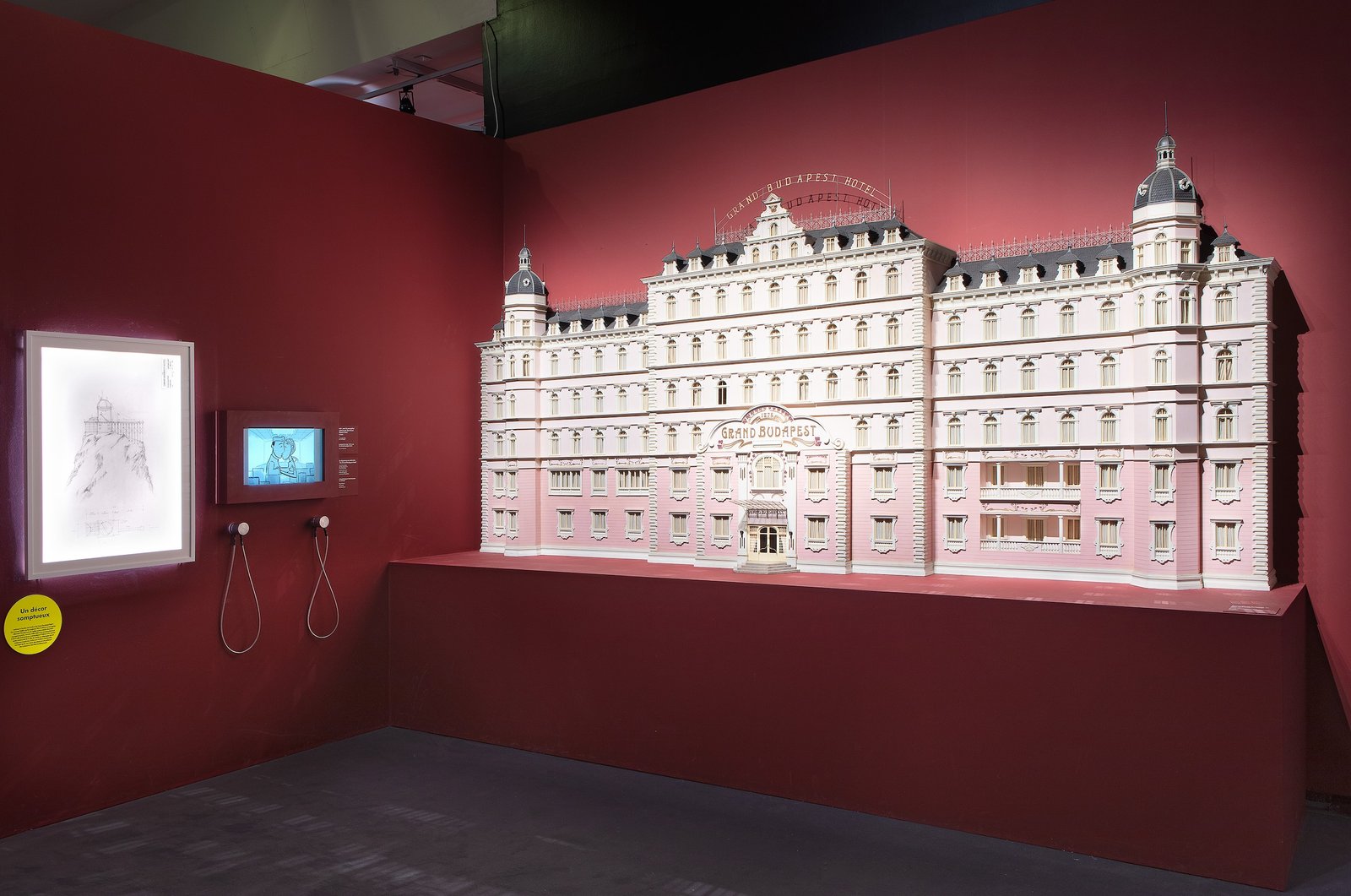
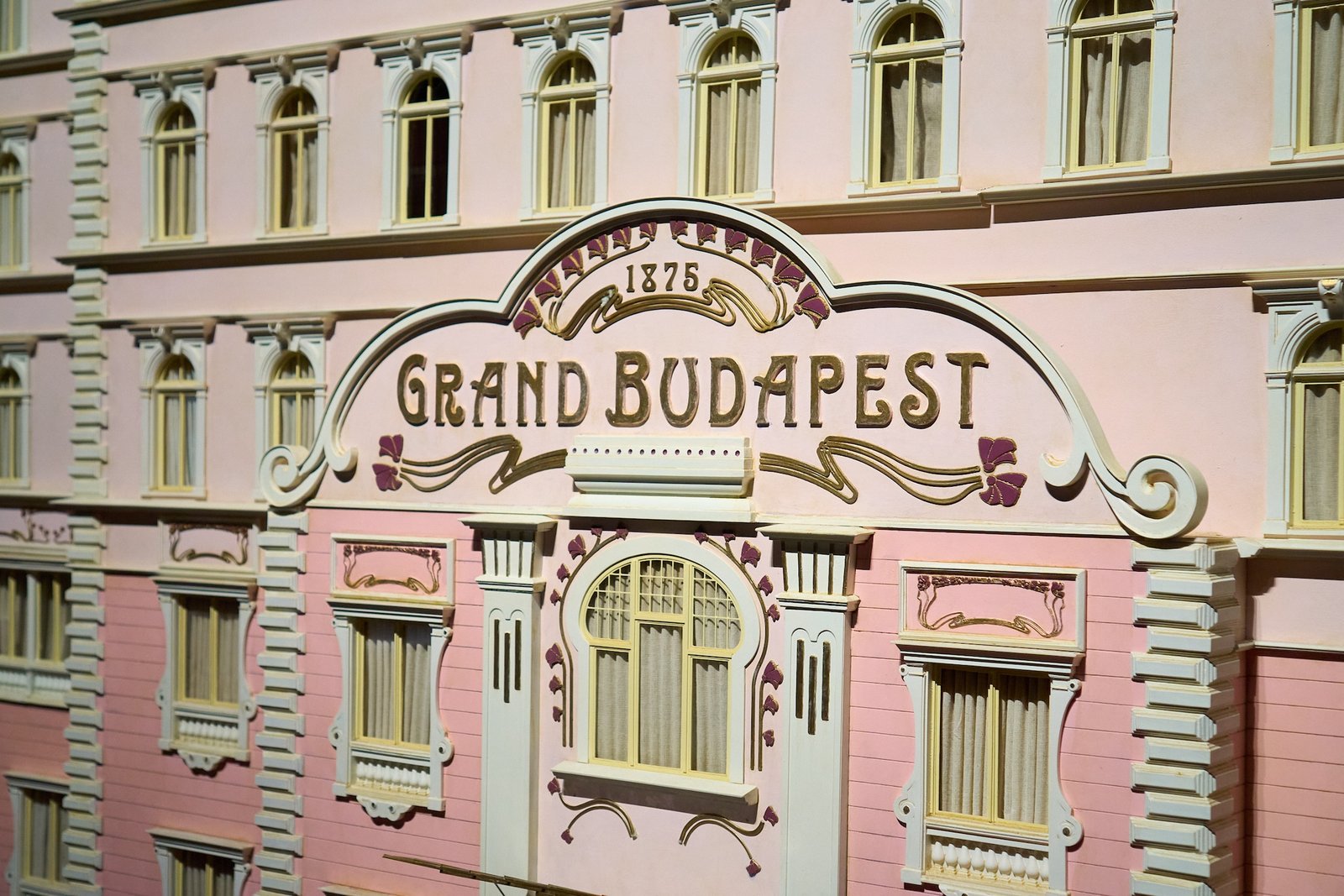
The Grand Budapest Hotel. Wes Anderson Exhibition. Photo: Stéphane Dabrowski, La Cinémathèque française
Wes Anderson Exhibition, photo by Tal Solomon Vardy
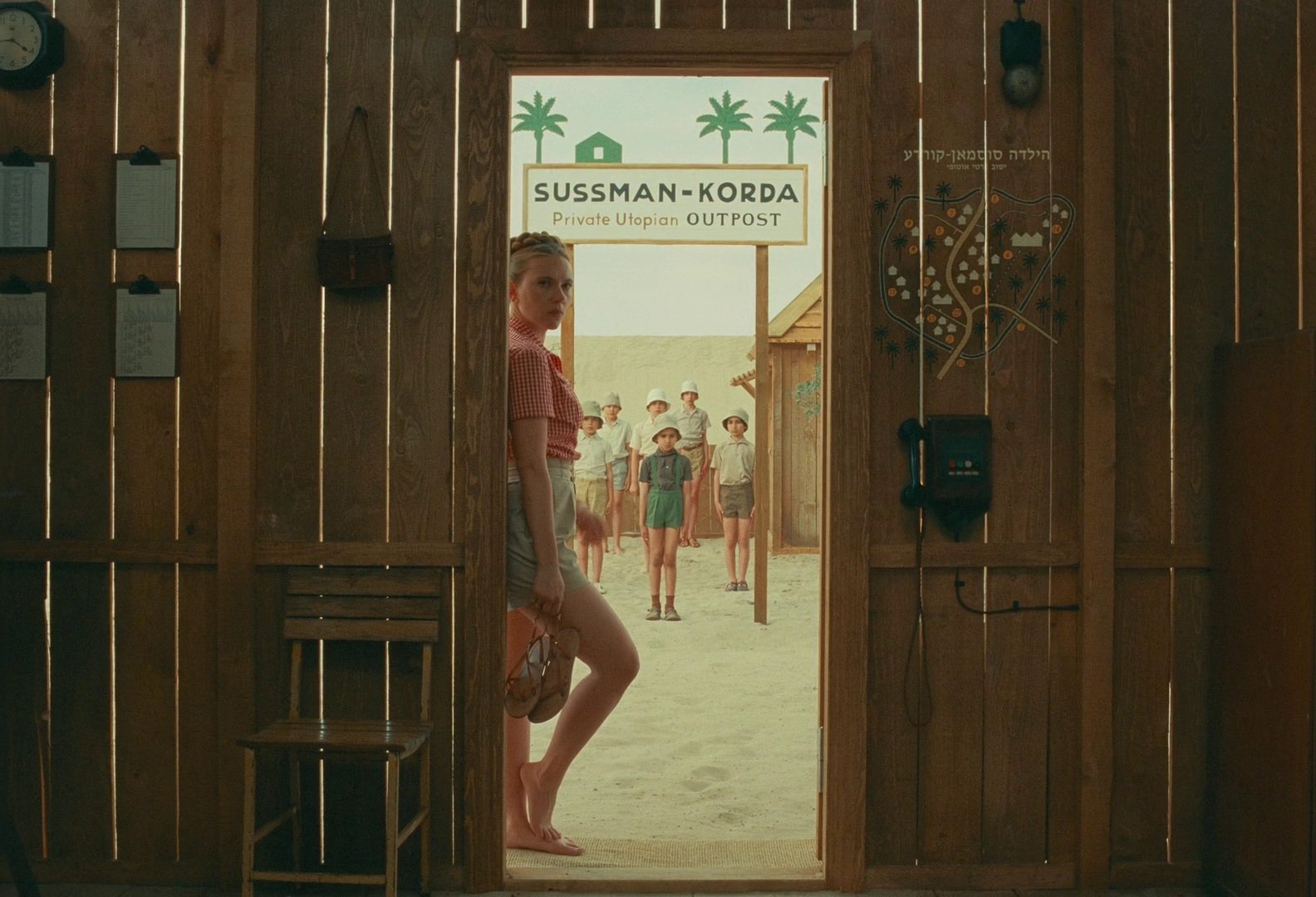
While watching The Phoenician Scheme, I noticed that two signs appeared in Hebrew. This sparked my curiosity, and in the translation credits the name of Gali Blay appeared.
Gali, can you explain the Hebrew signs that appear in the film? How was the work with Erica Dorn?
“In Wes Anderson’s films it’s never really clear where we are geographically. Based on the main character on whom the film is based and the story, it can be understood that everything happens somewhere in the Middle East, and therefore the Hebrew signs also appeared. Erica Dorn, the lead graphic designer, is very nice and working with her was very smooth. They knew that there was an Israeli working on the production and asked me to translate some signs.
The problem was that in Hebrew many things become political when it comes to geographical subjects. Like, for example, to translate the word settlement. I explained to them that the most direct word is hitnakhlut [התנחלות], but that it has a very problematic political connotation. At that point she involved the producers and we chose the word hityashvut [התיישבות].”