“Dido and Aeneas”: Stefano Poda Juggles Between Ancient Ruins and a Magnificent Futuristic Vision
Tal Solomon Vardy
Photo: Tal Solomon Vardy
Stefano Poda, one of the greatest opera directors, returns to Israel with Purcell’s “Dido and Aeneas” in a production that is a total visual vision combining moving sculpture, dance, and drama. Between ruined walls and a shipwreck, this is a cultural peak.
Dido and Aeneas - Stefano Poda, photo by Tal Solomon Vardy
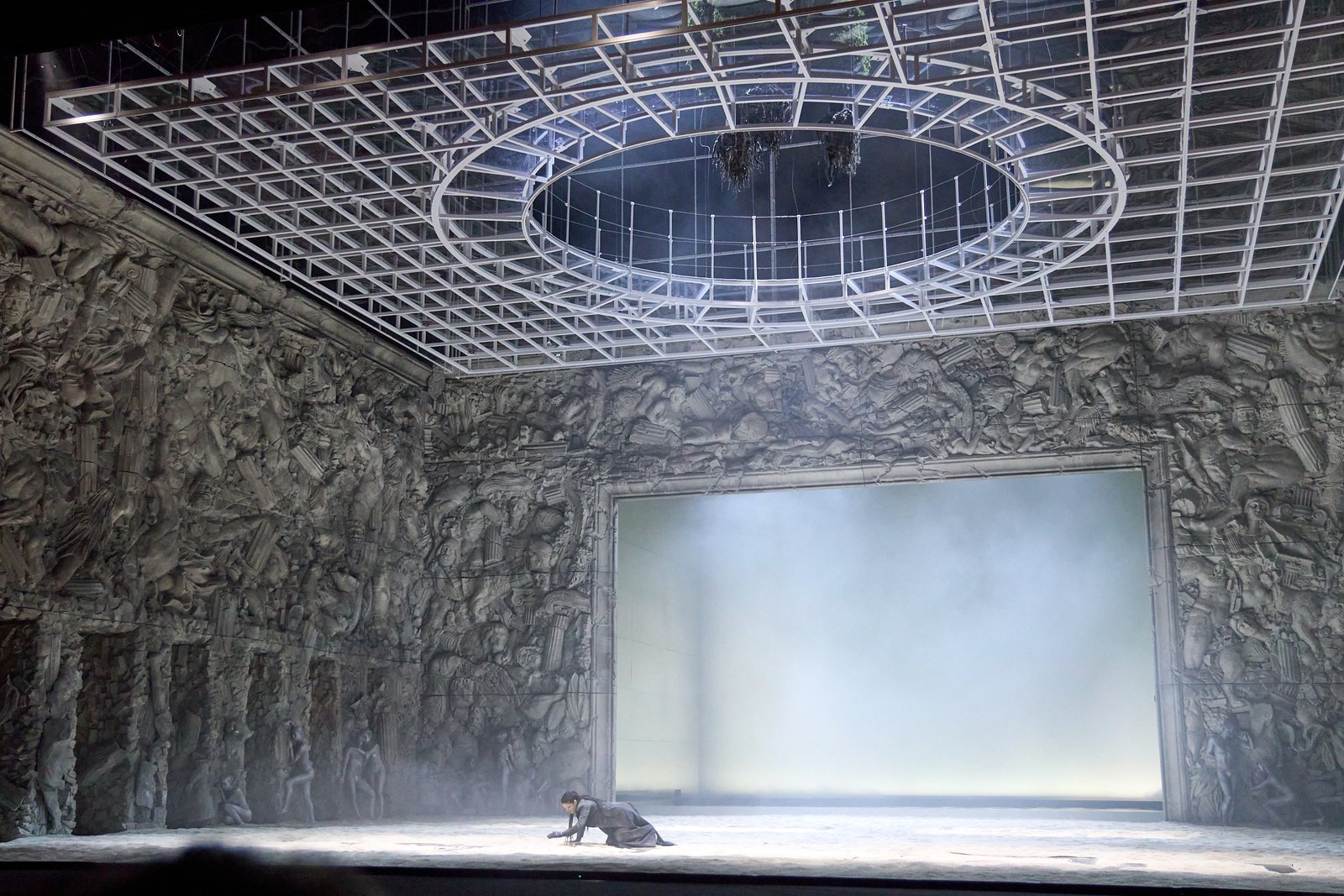
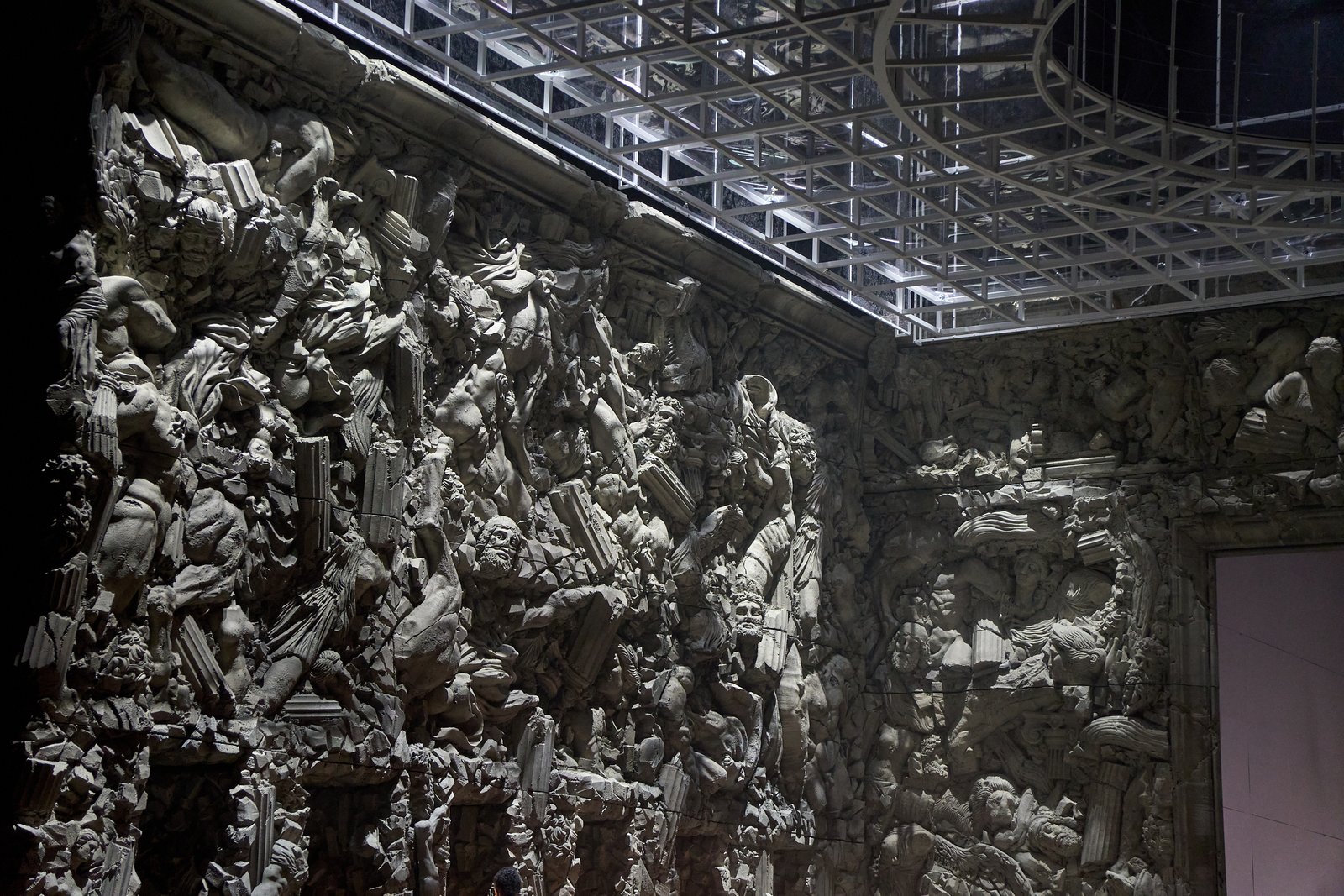
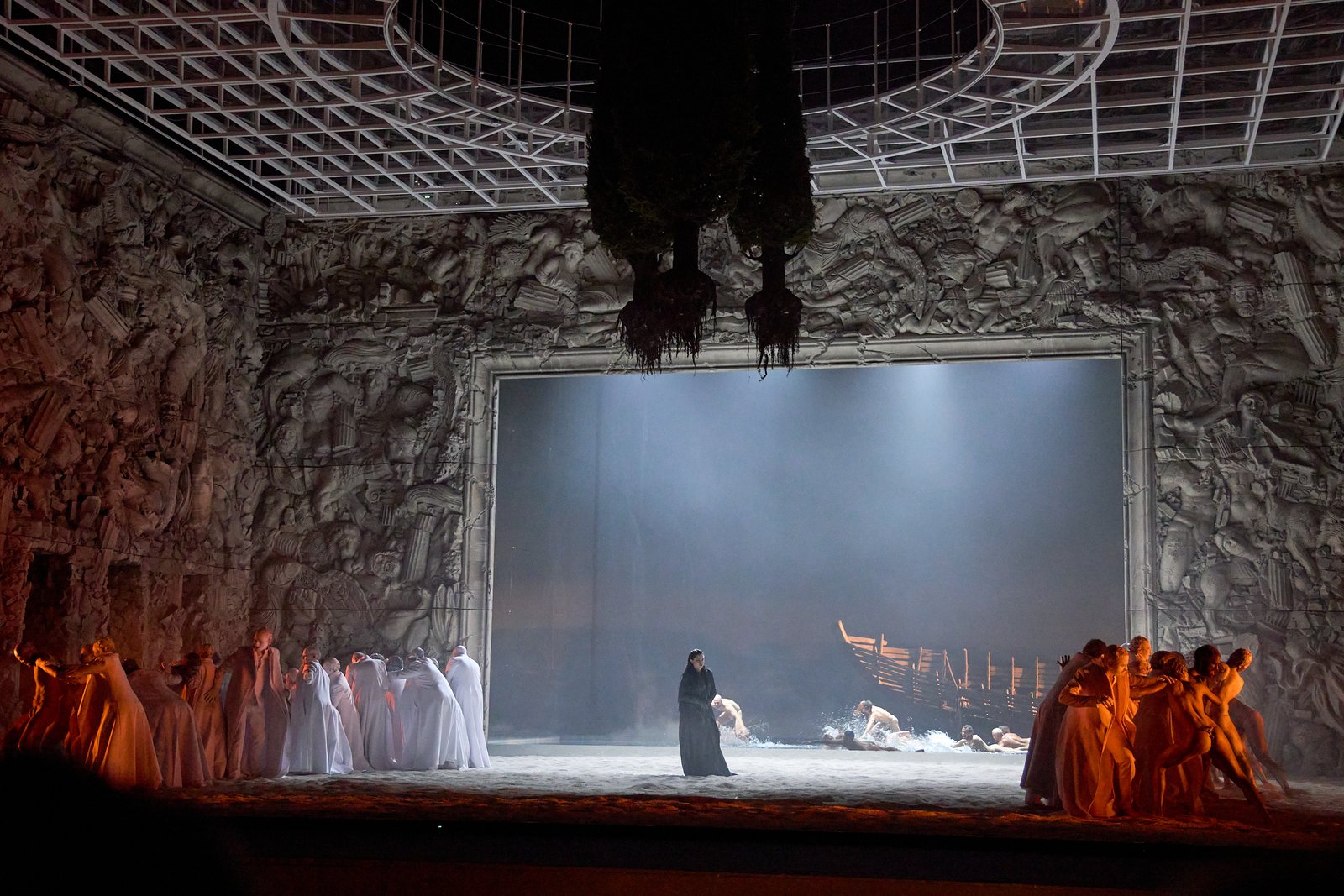
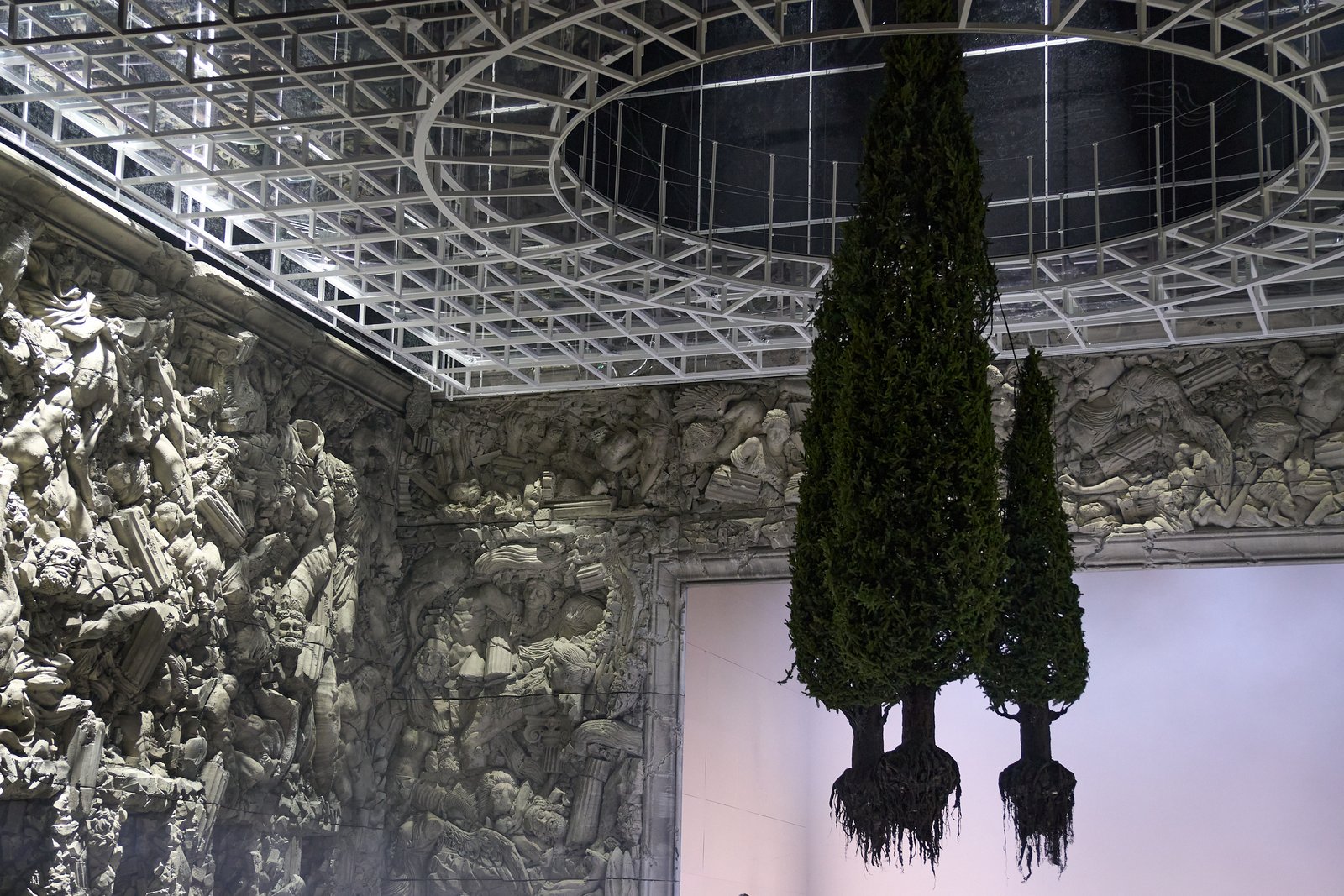
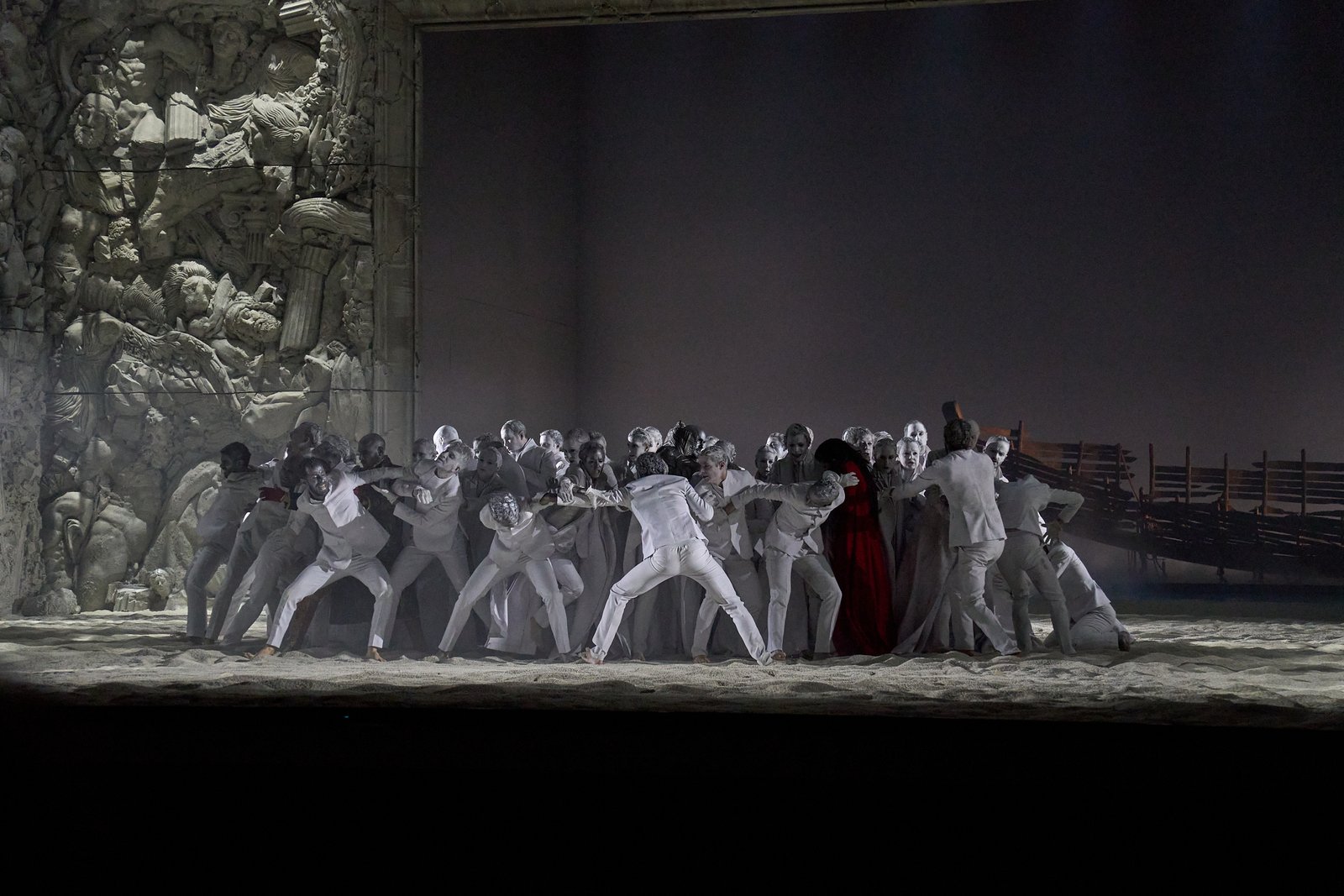
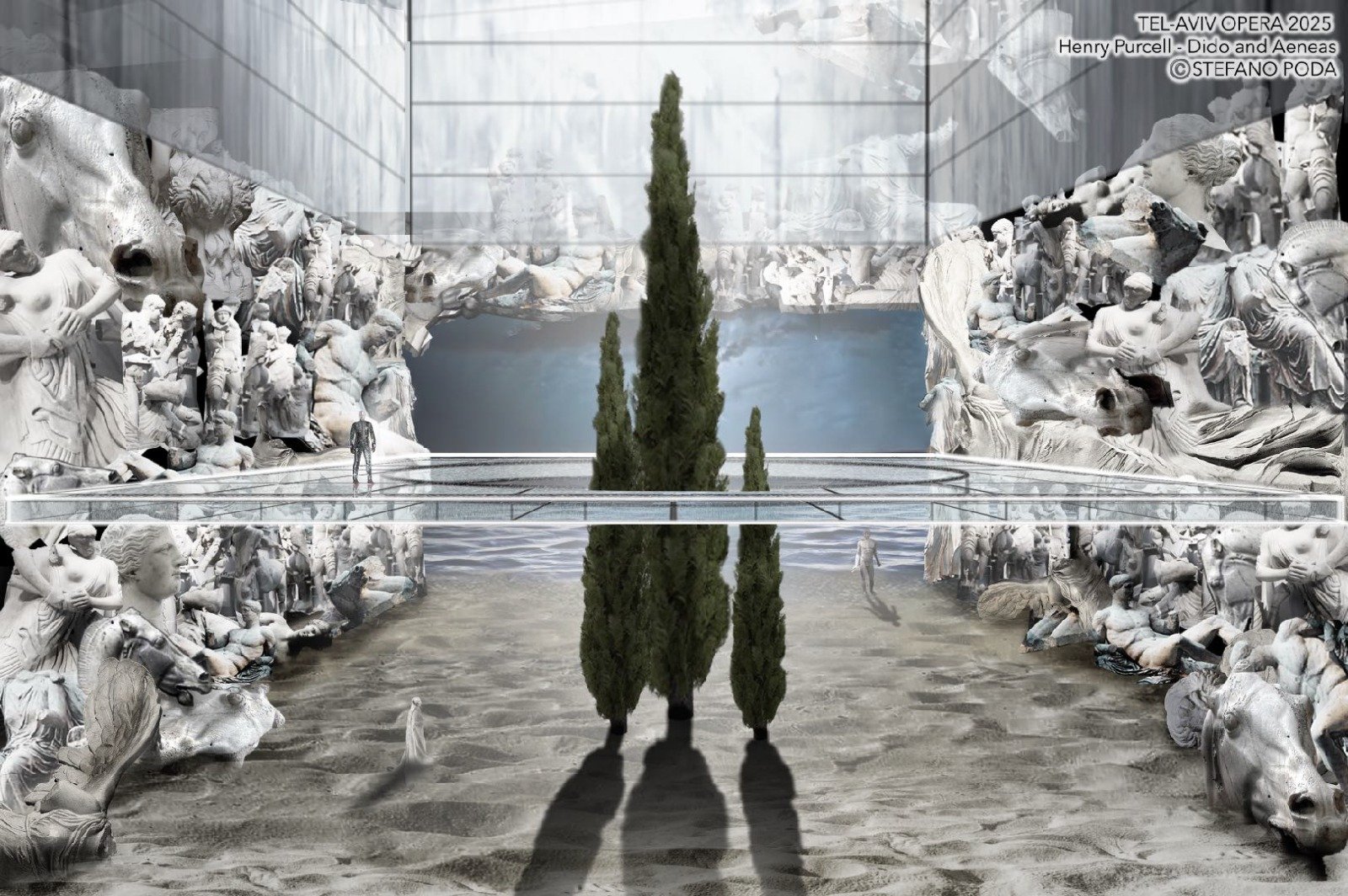
The black curtain rises. The opera opens with the sorrowful singing of Dido (Anat Czarny), Queen of Carthage, following her longing for Aeneas (Oded Reich), the Trojan prince who captured her heart. Dido is surrounded by set walls made of ruins inspired by Greek architecture—broken columns and statues, compressed together, symbolizing a glorious past. On the stage floor is sand on a deserted beach. Suddenly, the dancers, male and female, clinging to the walls, all painted in dark camouflage colors without costumes, emerge from them and move without cease. Their movements are slow, their bodies bare, and they create compositions I have never seen. Imagine sculptures in motion. In the ceiling, the future awaits us, we will get there later.
Dido and Aeneas - Stefano Poda, photo by Tal Solomon Vardy
The Israeli Opera returns to the production of Henry Purcell’s “Dido and Aeneas” the first production that premiered in 1985, this time directed by Stefano Poda, one of today’s greatest opera directors, together with Paolo Giani Cei. While the cultural boycott on Israel tightens, Poda returns here again and again, and excels at juggling directing, choreography, stage design, and costumes. True, he is a pedant.
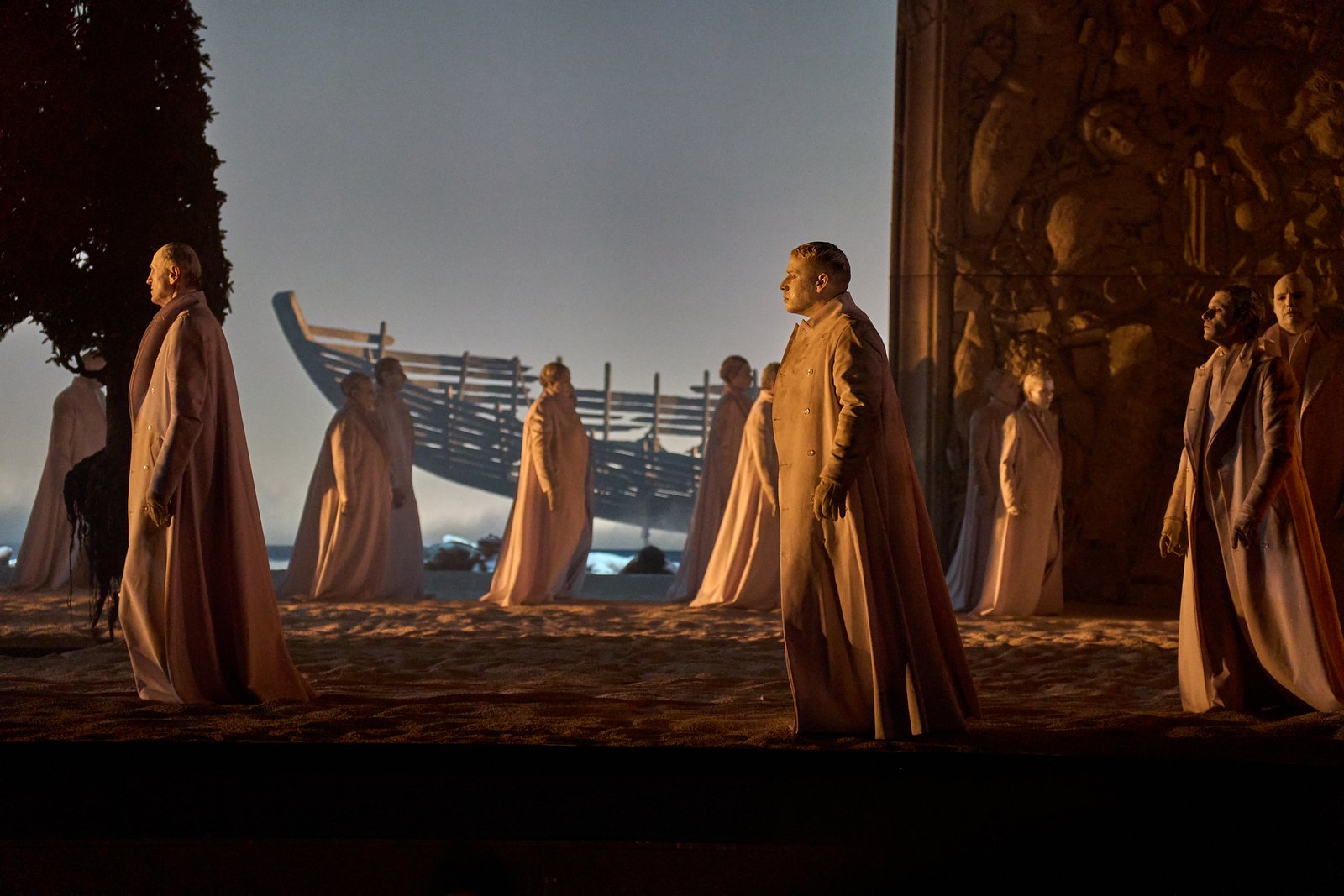
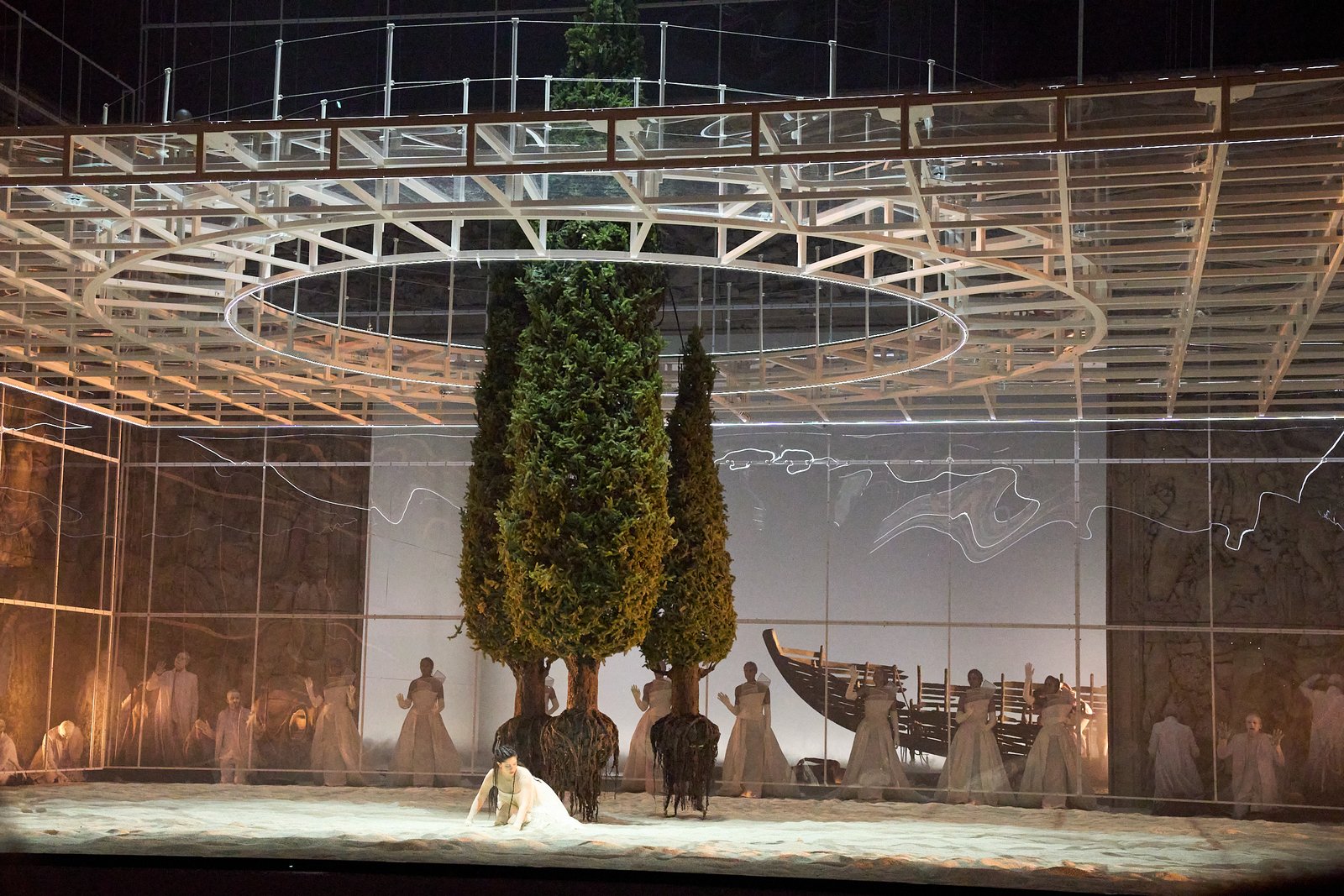
Behind the set walls at the front of the stage — a shipwreck emerges in the background, on the seashore. Here too, as in “Rusalka”, Poda designs a pool of water on the stage, and the dancers struggle within it, trying to get out. Their movement generates unease, while the events involving Dido and Aeneas continue at the front of the stage, together with the chorus painted in black and white.
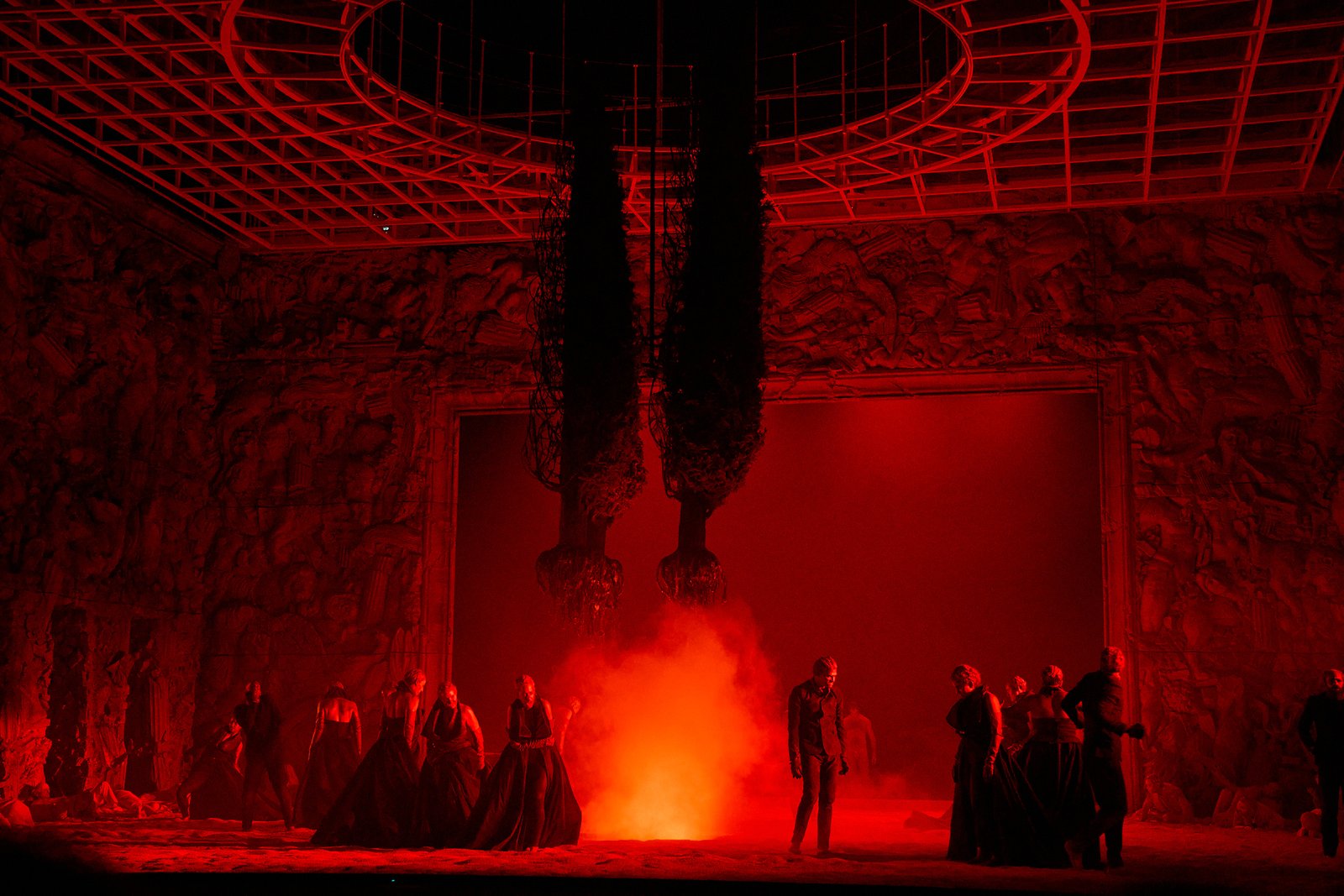
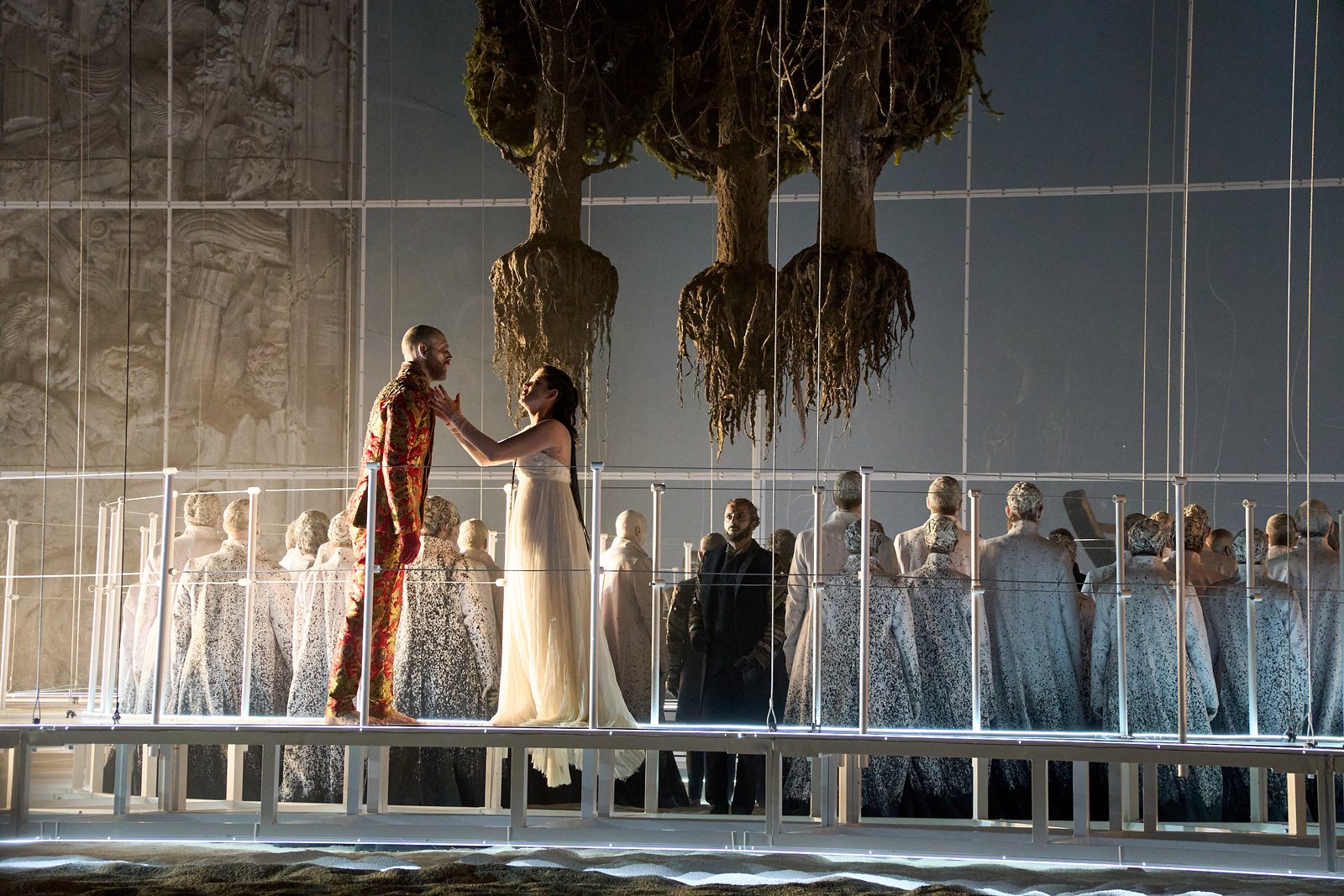
Three enormous, semi-bare Christmas trees descend to the center of the stage, hovering, inspired by René Magritte. Their changing distance from the floor increases and decreases the tension according to the plot.
Dido and Aeneas - Stefano Poda, photo by Tal Solomon Vardy
Dido and Aeneas - Stefano Poda, photo by Tal Solomon Vardy
Dido and Aeneas - Stefano Poda, photo by Tal Solomon Vardy
Red lighting floods the stage, and the Sorceress (Shai Bloch) bursts forth from within, seeking to bring about the downfall of Dido and the Kingdom of Carthage. Her companions, in black and menacing dresses, create a storm to force Dido to return to the palace. I never imagined it was possible to create such convincing lightning and thunder on stage, but Stefano Poda succeeded. I clung to my seat.
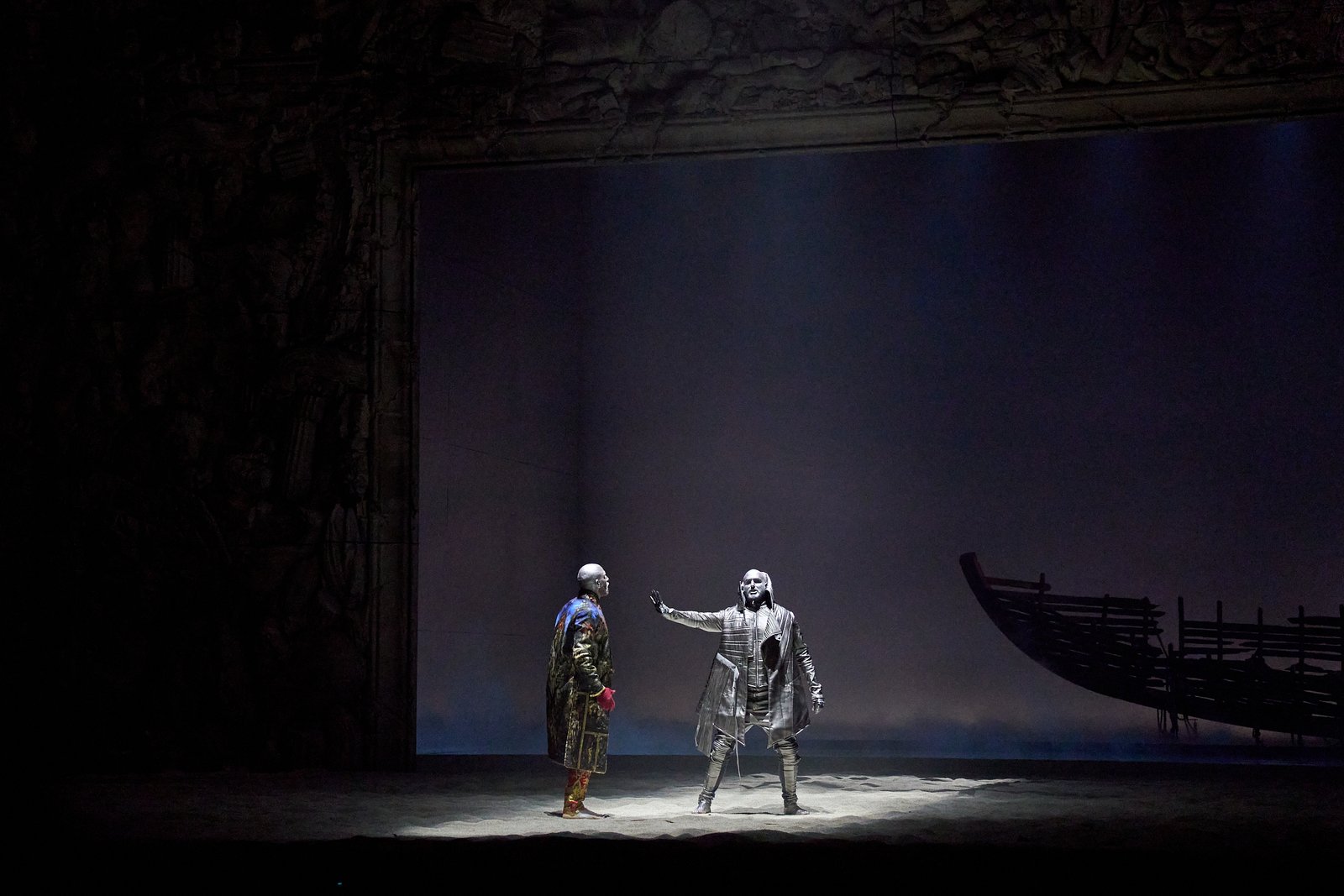
The disguised spirit, made up and dressed in dark gray colors, convinces Aeneas to abandon Dido and sail to Italy to establish the New Troy at the command of the gods (sound familiar to you?), but his heart is broken.
Dido and Aeneas - Stefano Poda, photo by Tal Solomon Vardy
Dido and Aeneas - Stefano Poda, photo by Tal Solomon Vardy
Dido and Aeneas - Stefano Poda, photo by Tal Solomon Vardy
Dido and Aeneas - Stefano Poda
Throughout the entire opera, the movement on stage is incessant, both on the part of the singers and the dancers, and in terms of the lighting. Backwards and forwards, left and right – as a hint of the disaster that is about to occur.
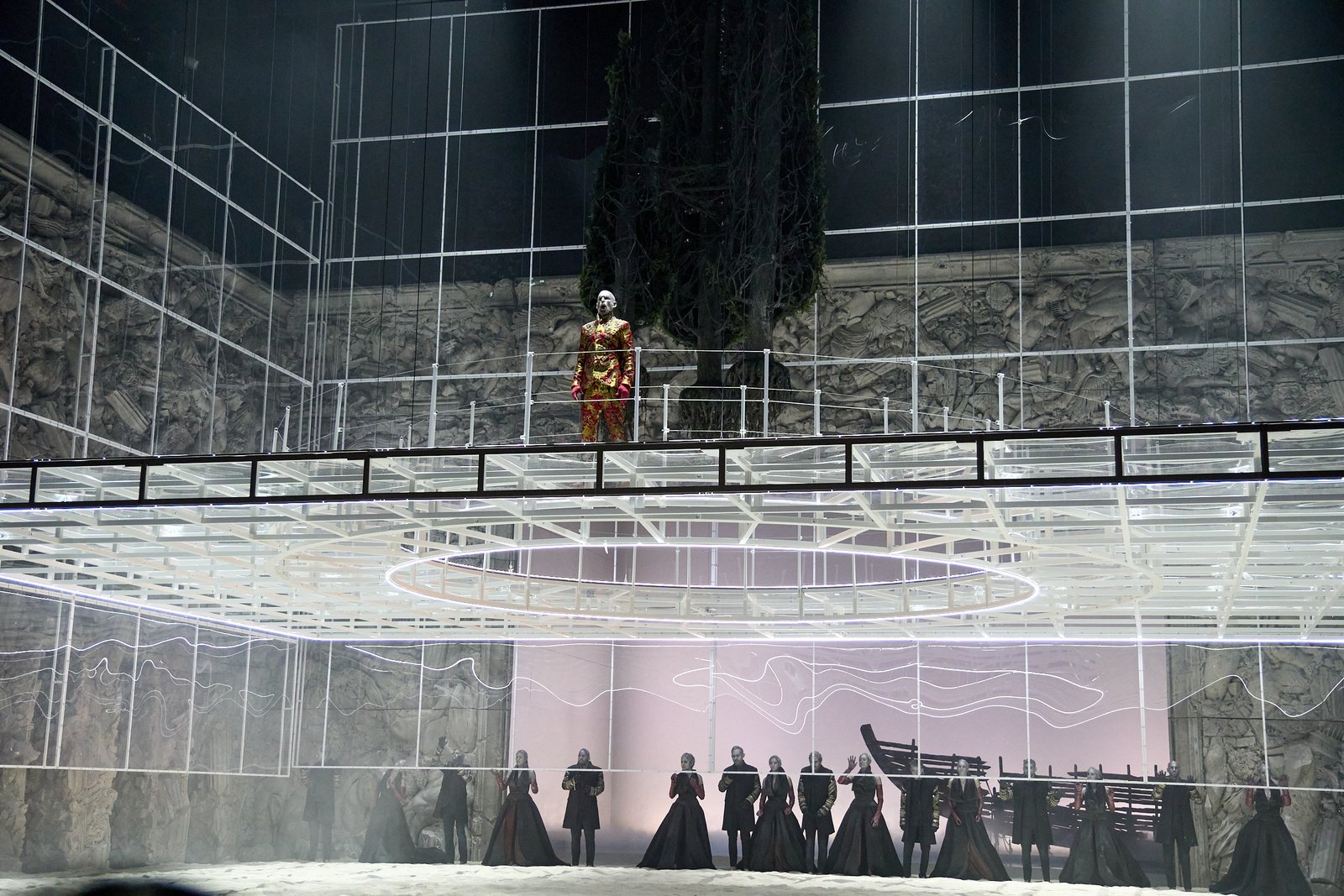
In the third act of “Dido and Aeneas” the peak of Stefano Poda’s design arrives: an enormous platform, the width and length of the stage, in a futuristic design—slowly descends. Built of white, cold metal beams, with a transparent floor and minimalist lighting, “like a smooth column upon which nothing has yet been written,” according to Poda. Aeneas climbs onto it and floats upwards, abandoning Dido, but not before she scorns him. He returns to her, and she implores him to leave. In the center of the platform is a large hole that encircles the Christmas trees to amplify the surreal feeling. This is undoubtedly one of the most magnificent compositions I have seen on stage.
Dido and Aeneas - Stefano Poda, photo by Tal Solomon Vardy
For a change, “Dido and Aeneas” is sung in English (the original language) – and this is a refreshing element. As someone who has no chance of learning German or Italian, for the first time, I grasped the words without my eyes darting to the translation screens. The singing segments are not long, and most of the opera is structured with precise dance sections.
The orchestral performance by the Barrocada Ensemble, conducted by Gerd Amelung, was low in its volume. Despite sitting in the fifth row — we struggled to hear the beautiful sounds. This was a missed opportunity given that the orchestra uses instruments not usually heard every day – lute, violone, harpsichord, theorbo, baroque guitar, and more.
Dido and Aeneas - Stefano Poda, photo by Tal Solomon Vardy
The opera concludes with Dido’s suicide, as the chorus members are enclosed outside the transparent walls descending from above, creating a modern prison, a strong and clean image representing her tragic fate.
Stefano Poda and Paolo Giani Cei, the directors of “Dido and Aeneas” remind to the Israeli culture what heights can be reached and what can be aspired to, and their influence is evident in the productions that have premiered here since the end of the COVID-19 pandemic.